

Your marriage green card — without leaving the U.S.
If you're married to a U.S. citizen or permanent resident and you're already living in the United States, adjustment of status (Form I-485) lets you become a green-card holder without going back to a consulate abroad — and lets you work and travel while you wait.
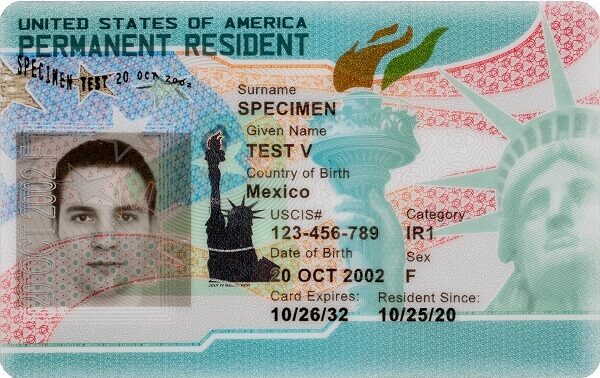
- Adjustment of status (Form I-485). The in-country path to a green card for a spouse who is already in the United States — no consular trip abroad.
- Married to a U.S. citizen? If you entered lawfully, you can usually adjust even if you later overstayed or worked without authorization.
- Work and travel while you wait. A work permit (I-765) and advance parole (I-131) can be filed with the green-card application.
- We file the whole package. The I-130 petition, the I-485 adjustment application, the I-864 affidavit of support, and the I-765/I-131.
- Spouse abroad instead? That's the consular route — see spousevisa.com.
The law hasn't changed — but the environment has.
In May 2026, USCIS issued a policy memorandum (PM-602-0199) that reframes adjustment of status as an "extraordinary" act of discretion rather than a right. Your statutory eligibility is intact. But officers now scrutinize these cases far more heavily — weighing past overstays or unauthorized work as negative factors, toughening interviews, and making travel on a pending case risky. In this climate, experienced representation matters more than ever.
Read: how the 2026 policy shift affects your case →Adjustment of status: the in-U.S. path to a green card
There are two ways for the foreign-born spouse of a U.S. citizen or permanent resident to become a green-card holder. If your spouse is abroad, the case runs through a U.S. consulate (the CR-1/IR-1 spouse visa — see spousevisa.com). If the foreign spouse is already in the United States after a lawful entry, adjustment of status lets you get the green card from inside the country, without leaving.
You may adjust if three things are true. You were "inspected and admitted or paroled" into the United States. An immigrant visa is available to you. And you are admissible. For the spouse of a U.S. citizen, a visa is always available, so the two petitions can be filed together.
The big advantage for spouses of U.S. citizens
The spouse of a U.S. citizen is an "immediate relative." Immediate relatives are exempt from the adjustment bars that stop most other applicants. So even if you later overstayed your visa, fell out of status, or worked without authorization, you can generally still adjust. The one condition: you must have been inspected and admitted or paroled when you entered. The rules are stricter for the spouse of a permanent resident.
How the process works
- File the petition and the application together. For the spouse of a U.S. citizen, we file Form I-130 (the petition) and Form I-485 (adjustment of status) at the same time. This is "concurrent filing." We include the I-864 affidavit of support.
- Work permit and travel document. With the I-485 we also file Form I-765 (employment authorization) and Form I-131 (advance parole), so you can work and travel while the case is pending. Do not travel on a pending case without advance parole.
- Biometrics. USCIS takes your fingerprints and photo at a local application support center.
- Interview. You and your spouse attend an interview at a USCIS field office in the United States, where an officer confirms the marriage is genuine and your eligibility.
- Green card. On approval you become a lawful permanent resident. If you have been married less than two years when the card is approved, it is conditional for two years. You later file Form I-751 to remove the condition.
How we help
We confirm you are eligible to adjust before anything is filed, prepare and review every form and exhibit, build the relationship-evidence packet, file the work-permit and travel applications, prepare you and your spouse for the interview, and respond to any Requests for Evidence. A licensed U.S. immigration attorney stays on the file from intake through approval.
Who qualifies to adjust
- You entered lawfully. You were "inspected and admitted or paroled" into the U.S. — for example, on a visa or the visa-waiver program.
- You're married to a U.S. citizen or permanent resident. A citizen's spouse is an immediate relative and can file right away. A permanent resident's spouse (family second preference, F2A) must wait for a visa number to become available.
- A visa is available to you. Always true for a citizen's spouse; for a permanent resident's spouse, this is tracked on the State Department's monthly Visa Bulletin.
- You're admissible. Certain issues (some immigration or criminal history) can require a waiver; we screen for these early.
Where cases go wrong
- Entry without inspection. If you entered without being inspected and admitted or paroled, you generally cannot adjust. You must consular-process abroad, which can trigger unlawful-presence bars. A provisional waiver (Form I-601A) often handles this before you leave. This is the single most important thing to get right before anyone travels.
- Assuming the citizen-spouse exemption applies to everyone. The exemption for overstays and unauthorized work is for immediate relatives of citizens. A permanent resident's spouse does not get it.
- Thin proof the marriage is bona fide. A marriage entered to evade the immigration laws is barred permanently. Build the relationship record from the start.
- Affidavit-of-support shortfalls. The petitioner must meet the income threshold or use a joint sponsor.
Sources
This page summarizes federal immigration law and official government guidance in plain language. It is general information, not legal advice.
- Adjustment of status — INA § 245 (8 U.S.C. § 1255); USCIS Policy Manual, Vol. 7.
- Immediate relatives (spouse of a citizen) — INA § 201(b)(2)(A)(i) (8 U.S.C. § 1151); family second preference, F2A — INA § 203(a)(2)(A) (8 U.S.C. § 1153).
- Petition and marriage-fraud bar — INA § 204 (8 U.S.C. § 1154). Affidavit of support — INA § 213A (8 U.S.C. § 1183a). Conditional residence — INA § 216 (8 U.S.C. § 1186a).
- USCIS forms — I-485, I-130, I-765, I-131, I-864, I-601A.
Common questions.
Can I get a marriage green card without leaving the U.S.?
Often, yes. If you were inspected and admitted or paroled into the U.S. (a lawful entry) and you are the spouse of a U.S. citizen, you can usually apply from inside the country through adjustment of status (Form I-485), rather than going to a consulate abroad. The spouse of a green-card holder can also adjust, but only when a visa number is available.
What if I overstayed my visa or worked without permission?
For the spouse of a U.S. citizen, that usually is not a bar. Immediate relatives of citizens are exempt from the adjustment bars that stop other applicants — overstay, falling out of status, and unauthorized work — as long as you were inspected and admitted or paroled when you entered. The rules are stricter for the spouse of a permanent resident.
What if I entered without inspection?
If you entered without being inspected and admitted or paroled, you generally cannot adjust and would consular-process abroad, which can trigger unlawful-presence bars. Many couples use a provisional waiver (Form I-601A) before departing. We assess this carefully before anyone files or travels.
Can I work and travel while my case is pending?
Usually yes — you can file a work permit (Form I-765) and advance parole (Form I-131) with your I-485. Do not travel on a pending case without advance parole, or you may abandon it.
Adjustment of status or consular processing?
If the foreign spouse is already in the U.S. after a lawful entry, adjustment of status keeps everything here. If the spouse is abroad, the case goes through a U.S. consulate — the CR-1/IR-1 spouse visa at spousevisa.com. We help you choose the right path.
Get your green card from home.
Free consultation with a U.S. immigration attorney. No obligation.